AVI4M online focuses on enabling students to refine their use of the creative process when creating and presenting two- and three-dimensional artworks using a variety of traditional and emerging media and technologies. Students will use the critical analysis process to deconstruct artworks and explore connections between art and society. The studio program enables students to explore a range of materials, processes, and techniques that can be applied in their own art production. Students will also make connections between various works of art in personal, contemporary, historical, and cultural contexts.
William Academy Online
-
-
The Student Handbook is your guide to getting set up with William Academy Online, and what to do to ensure you have the best online learning experience possible!
-
School Course Calendar, outlining all policies and requirements of William Academy.
-
Students can find information about Community Involvement here.
-
This document explains how to reach your teachers as well as getting additional support when needed!
-
Click this activity if you would like to watch a video on navigating your courses!
-
This guide helps you with setting up Microsoft Office 365 web, which will give you access to the web versions of Microsoft Office (including Word, PowerPoint and Excel)!
-
As part of your studies with William Academy, you will be using a lockdown browser called the Safe Exam Browser (SEB), which will provide a secure method for writing tests and exams. Follow this guide on how to set up the Safe Exam Browser.
Skip available courses
Available courses


This course enables students to develop their skills in producing and presenting art by introducing them to new ideas, materials, and processes for artistic exploration and experimentation. Students will apply the elements and principles of design when exploring the creative process. Students will use the critical analysis process to reflect on and interpret art within a personal, contemporary, and historical context.
- Teacher: Stewart, Ms. Lauren

This course introduces students to the fundamental principles and procedures of accounting. Students will develop financial analysis and decision-making skills that will assist them in future studies and/or career opportunities in business. Students will acquire an understanding of accounting for a service and a merchandising business, computerized accounting, financial analysis, and ethics and current issues in accounting.
Prerequisite: None
- Teacher: Bilous, Vitaliy

This course focuses on the development of leadership skills used in managing a successful business. Students will analyse the role of a leader in business, with a focus on decision making, management of group dynamics, workplace stress and conflict, motivation of employees, and planning. Effective business communication skills, ethics, and social responsibility are also emphasized.
Prerequisite: None
- Teacher: Bilous, Vitaliy

This course provides an overview of the importance of international business and trade in the global economy and explores the factors that influence success in international markets. Students will learn about the techniques and strategies associated with marketing, distribution, and managing international business effectively. This course prepares students for post-secondary programs in business, including international business, marketing, and management.
Prerequisite: None
- Teacher: Bilous, Vitaliy
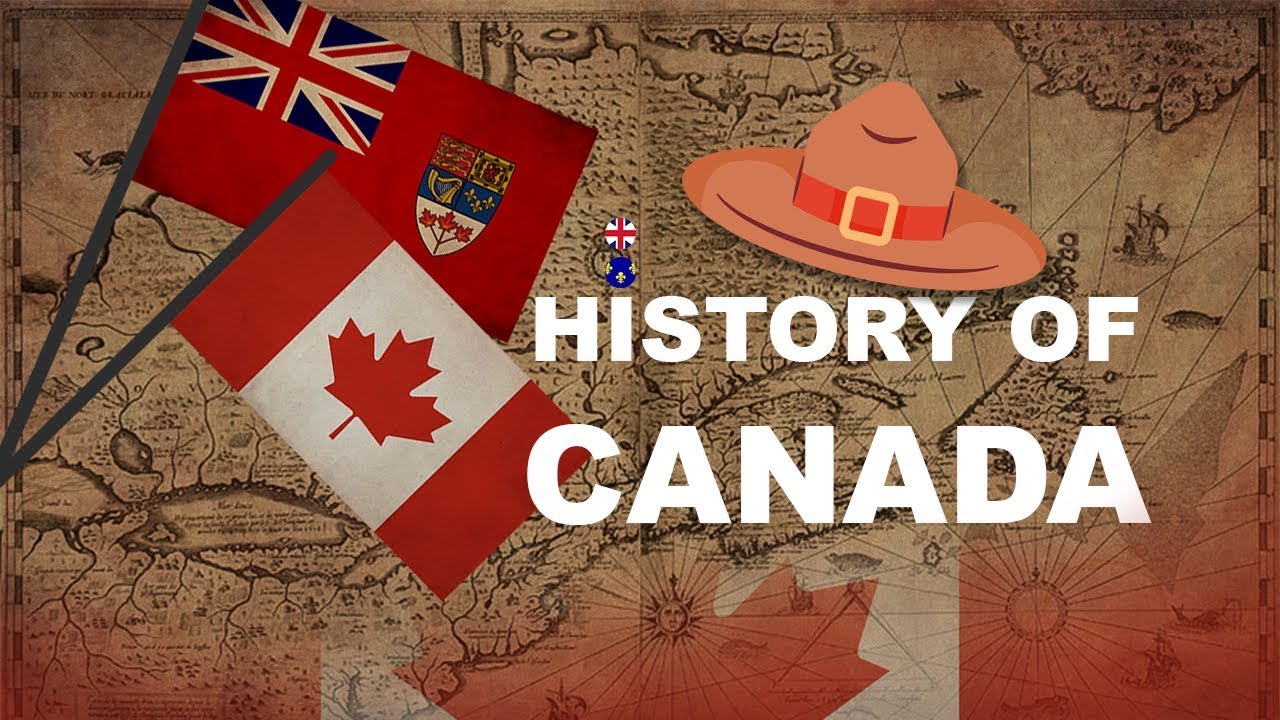
This course traces the history of Canada, with a focus on the evolution of our national identity and culture as well as the identity and culture of various groups that make up Canada. Students will explore various developments and events, both national and international, from precontact to the present, and will examine various communities in Canada and how they have contributed to identity and heritage in Canada. Students will investigate the development of culture and identity, including national identity, in Canada and how and why they have changed throughout the country’s history. They will extend their ability to apply the concepts of historical thinking and the historical inquiry process, including the interpretation and analysis of evidence, as they investigate the people, events, and forces that have shaped Canada.
Prerequisite: Any university or university/college preparation course in Canadian and world studies, English, or social sciences and humanities

- Teacher: Bilous, Vitaliy

This course examines current Canadian and international economic issues, developments, policies, and practices from diverse perspectives. Students will explore the decisions that individuals and institutions, including governments, make in response to economic issues such as globalization, trade agreements, economic inequalities, regulation, and public spending. Students will apply the concepts of economic thinking and the economic inquiry process, as well as economic models and theories, to investigate, and develop informed opinions about, economic trade-offs, growth, and sustainability and related economic issues.
Prerequisite: Any university or university/college preparation course in Canadian and world studies, English, or social sciences and humanities
- Teacher: Bilous, Vitaliy
This course explores social, economic, and political developments and events and their impact on the lives of different individuals, groups, and communities, including First Nations, Métis, and Inuit individuals and communities, in Canada since 1914. Students will examine the role of conflict and cooperation in Canadian society, Canada’s evolving role within the global community, and the impact of various individuals, organizations, and events on identities, citizenship, and heritage in Canada. Students will develop an understanding of some of the political developments and government policies that have had a lasting impact on First Nations, Métis, and Inuit individuals and communities. They will develop their ability to apply the concepts of historical thinking and the historical inquiry process, including the interpretation and analysis of evidence, when investigating key issues and events in Canadian history since 1914.
Prerequisite: None
- Teacher: Bilous, Vitaliy
This course explores rights and responsibilities associated with being an active citizen in a democratic society. Students will explore issues of civic importance and the influence of social media, while developing their understanding of the role of civic engagement and of political processes in the local, national, and/or global community. Students will apply the concepts of political thinking and the political inquiry process to investigate, and express informed opinions about, a range of political issues and developments that are both of significance in today’s world and of personal interest to them. This course also includes learning on digital literacy and critical-thinking skills, the mechanisms of government, Indigenous governance systems and structures, the historical foundations of the rights and freedoms we enjoy in Canada, ways in which government policy affects individuals’ lives and the economy, and ways for students to serve their communities.
Prerequisite: None
- Teacher: Bilous, Vitaliy

This course examines interrelationships within and between Canada’s natural and human
systems and how these systems interconnect with those in other parts of the world. Students
will explore environmental, economic, and social geographic issues relating to topics
such as transportation options, energy choices, and urban development. Students will
apply the concepts of geographic thinking and the geographic inquiry process, including
spatial technologies, to investigate various geographic issues and to develop possible
approaches for making Canada a more sustainable place in which to live.
This online ICS4U course enables students to further develop knowledge and skills in computer
science. Students will use modular design principles to create complex and fully documented programs, according to industry standards. Student teams will manage a large
software development project, from planning through to project review. Students will
also analyse algorithms for effectiveness. They will investigate ethical issues in computing and further explore environmental issues, emerging technologies, areas of research
in computer science, and careers in the field.
- Teacher: Saifuddin, Taher
This course introduces students to computer science. Students will design software
independently and as part of a team, using industry-standard programming tools
and applying the software development life-cycle model. They will also write and use
subprograms within computer programs. Students will develop creative solutions for
various types of problems as their understanding of the computing environment grows.
They will also explore environmental and ergonomic issues, emerging research in computer science, and global career trends in computer-related fields.

This course provides students with the skills and strategies they need to make the
transition to college and university preparation courses in English and other secondary
school disciplines. Students will be encouraged to develop independence in a range of
academic tasks. They will participate in debates and lead classroom workshops; read
and interpret literary works and academic texts; write essays, narratives, and reports;
and apply a range of learning strategies and research skills effectively. Students will
further develop their ability to respond critically to print and media texts.
Prerequisite: ESLDO or relevant placement test results

This course prepares students to use English with increasing fluency and accuracy in
classroom and social situations and to participate in Canadian society as informed
citizens. Students will develop the oral-presentation, reading, and writing skills
required for success in all school subjects. They will extend listening and speaking
skills through participation in discussions and seminars; study and interpret a variety
of grade-level texts; write narratives, articles, and summaries in English; and respond
critically to a variety of print and media texts.
Prerequisite: ESLCO or relevant placement test results

This course further extends students' skills in listening, speaking, reading and writing in English for a variety of everyday and academic purposes. Students will make short classroom oral presentations; read a variety of adapted and original texts in English; and write using a variety of text forms. As well, students will expand their academic vocabulary and their study skills to facilitate their transition to the mainstream school program. This course also introduces students to the rights and responsibilities inherent in Canadian citizenship and to a variety of current Canadian issues.
Prerequisite: ESLBO or relevant placement test results

This course extends students’ listening, speaking, reading, and writing skills in English
for everyday and academic purposes. Students will participate in conversations in
structured situations on a variety of familiar and new topics; read a variety of texts
designed or adapted for English language learners; expand their knowledge of
English grammatical structures and sentence patterns; and link English sentences to
compose paragraphs. The course also supports students’ continuing adaptation
to the Ontario school system by expanding their knowledge of diversity in their new
province and country.
Prerequisite: ESLAO or relevant placement test results

This course is designed to help students acquire and demonstrate the cross-curricular literacy skills that are evaluated by the Ontario Secondary School Literacy Test. Students who complete the course successfully will meet the provincial literacy requirement for graduation. Students will read a variety of informational, narrative and graphic texts and will produce a variety of forms of writing, including summaries, information paragraphs, opinion pieces and news reports. Students will also maintain and manage a literacy portfolio containing a record of their reading experiences and samples of their writing.
Prerequisite: Students who have been eligible to write the OSSLT at least twice and who have been unsuccessful at least once are eligible to take the course. (Students who have already met the literacy requirement for graduation may be eligible to take the course under special circumstances, at the discretion of the principal.)
This
course gives students the opportunity to develop the skills, knowledge, and
habits that will support them in their education and career/life planning.
Students will learn about global work trends, and seek opportunities within the
school and community to expand and strengthen their transferable skills and
their ability to adapt to the changing world of work. On the basis of
exploration, reflective practice, and decision-making processes, students will
make connections between their skills, interests, and values and their
postsecondary options, whether in apprenticeship training, college, community
living, university, or the workplace. They will set goals and create a plan for
their first postsecondary year. As part of their preparation for the future,
they will learn about personal financial management – including the variety of
saving and borrowing tools available to them and how to use them to their
advantage – and develop a budget for their first year after secondary school.
Prerequisite: None
- Teacher: Bilous, Vitaliy
This course equips students with the knowledge and skills they need to make healthy choices now and lead healthy, active lives in the future. Through participation in a wide range of physical activities, students develop knowledge and skills related to movement competence and personal fitness that provide a foundation for active living. Students also acquire an understanding of the factors and skills that contribute to healthy development and learn how their own well-being is affected by, and affects, the world around them. Students build their sense of self, learn to interact positively with others, and develop their ability to think critically and creatively.
This course broadens students' understanding of mathematics as it relates to managing data. Students will apply methods for organizing and analyzing large amounts of information; solve problems probability and statistics; and carry out a culminating investigation that integrates statistical concepts and skills. Students will also refine their use of the mathematical processes necessary for success in senior mathematics. Students planning to enter university programs in business, the social sciences, and the humanities will find this course of particular interest.
Prerequisite: Functions, Grade 11 (MCR3U), University Preparation, or Mathematics for College Technology, Grade 12, (MCT4C), College Preparation
This course introduces the mathematical concept of the function by extending students' experiences with linear and quadratic relations. Students will investigate properties of discrete and continuous functions, including trigonometric and exponential functions; represent functions numerically, algebraically, and graphically; solve problems involving applications of functions; investigate inverse functions; and develop facility in determining equivalent algebraic expressions. Students will reason mathematically and communicate their thinking as they solve multi-step problems.
Prerequisite: Principles of Mathematics, Grade 10, Academic
- Teacher: Lu, Linda
This course enables students to consolidate, and continue to develop, an understanding of mathematical concepts related to number sense and operations, algebra, measurement, geometry, data, probability, and financial literacy. Students will use mathematical processes, mathematical modelling, and coding to make sense of the mathematics they are learning and to apply their understanding to culturally responsive and relevant real-world situations. Students will continue to enhance their mathematical reasoning skills, including proportional reasoning, spatial reasoning, and algebraic reasoning, as they solve problems and communicate their thinking.
- Teacher: Lu, Linda

This course enables students to deepen their understanding of chemistry through the study of organic chemistry, the structure and properties of matter, energy changes and rates of reaction, equilibrium in chemical systems, and electrochemistry. Students will further develop their problem-solving and investigation skills as they investigate chemical processes, and will refine their ability to communicate scientific information. Emphasis will be placed on the importance of chemistry in everyday life and on evaluating the impact of chemical technology on the environment.
Prerequisite: Chemistry, Grade 11, University Preparation

This course enables students to deepen their understanding of physics concepts and theories. Students will continue their exploration of energy transformations and the forces that affect motion, and will investigate electrical, gravitational, and magnetic fields and electromagnetic radiation. Students will also explore the wave nature of light, quantum mechanics, and special relativity. They will further develop their scientific investigation skills, learning, for example, how to analyse, qualitatively and quantitatively, data related to a variety of physics concepts and principles. Students will also consider the impact of technological applications of physics on society and the environment.
Prerequisite: Physics, Grade 11, University Preparation
- Teacher: Tchoketch Kebir, Ms. L

University Preparation SCH3U This course enables students to deepen their understanding of chemistry through the study of the properties of chemicals and chemical bonds; chemical reactions and quantitative relationships in those reactions; solutions and solubility; and atmospheric chemistry and the behaviour of gases. Students will further develop their analytical skills and investigate the qualitative and quantitative properties of matter, as well as the impact of some common chemical reactions on society and the environment.
Prerequisite: Science, Grade 10, Academic

This course develops students' understanding of the basic concepts of physics. Students will explore kinematics, with an emphasis on linear motion; different kinds of forces; energy transformations; the properties of mechanical waves and sound; and electricity and magnetism. They will enhance their scientific investigation skills as they test laws of physics. In addition, they will analyse the interrelationships between physics and technology, and consider the impact of technological applications of physics on society and the environment.
Prerequisite: Science, Grade 10, Academic

This course enables students to enhance their understanding of concepts in biology, chemistry, earth and space science, and physics, and of the interrelationships between science, technology, society, and the environment. Students are also given opportunities to further develop their scientific investigation skills. Students will plan and conduct investigations and develop their understanding of scientific theories related to the connections between cells and systems in animals and plants; chemical reactions, with a particular focus on acid–base reactions; forces that affect climate and climate change; and the interaction of light and matter.
Prerequisite: Science, Grade 9, Academic or Applied
This course enables students to develop their understanding of concepts related to biology, chemistry, physics, and Earth and space science, and to relate science to technology, society, and the environment. Throughout the course, students will develop and refine their STEM skills as they use scientific research, scientific experimentation, and engineering design processes to investigate concepts and apply their knowledge in situations that are relevant to their lives and communities. Students will continue to develop transferable skills as they become scientifically literate global citizens.

This course enables students to deepen their understanding of chemistry through the study of organic chemistry, the structure and properties of matter, energy changes and rates of reaction, equilibrium in chemical systems, and electrochemistry. Students will further develop their problem-solving and investigation skills as they investigate chemical processes, and will refine their ability to communicate scientific information. Emphasis will be placed on the importance of chemistry in everyday life and on evaluating the impact of chemical technology on the environment.
Prerequisite: Chemistry, Grade 11, University Preparation
This course provides orientation material for TAs.

This course emphasizes regular participation in a variety of enjoyable physical activities that promote lifelong healthy active living. Students will learn movement skills and principles, ways to improve personal fitness and physical competence, and safety and injury prevention. They will investigate issues related to healthy relationships, the use and abuse of alcohol, tobacco, and other drugs, and will participate in activities designed to develop goal-setting, communication, and social skills.
Skip course categories
Course categories
Skip courses